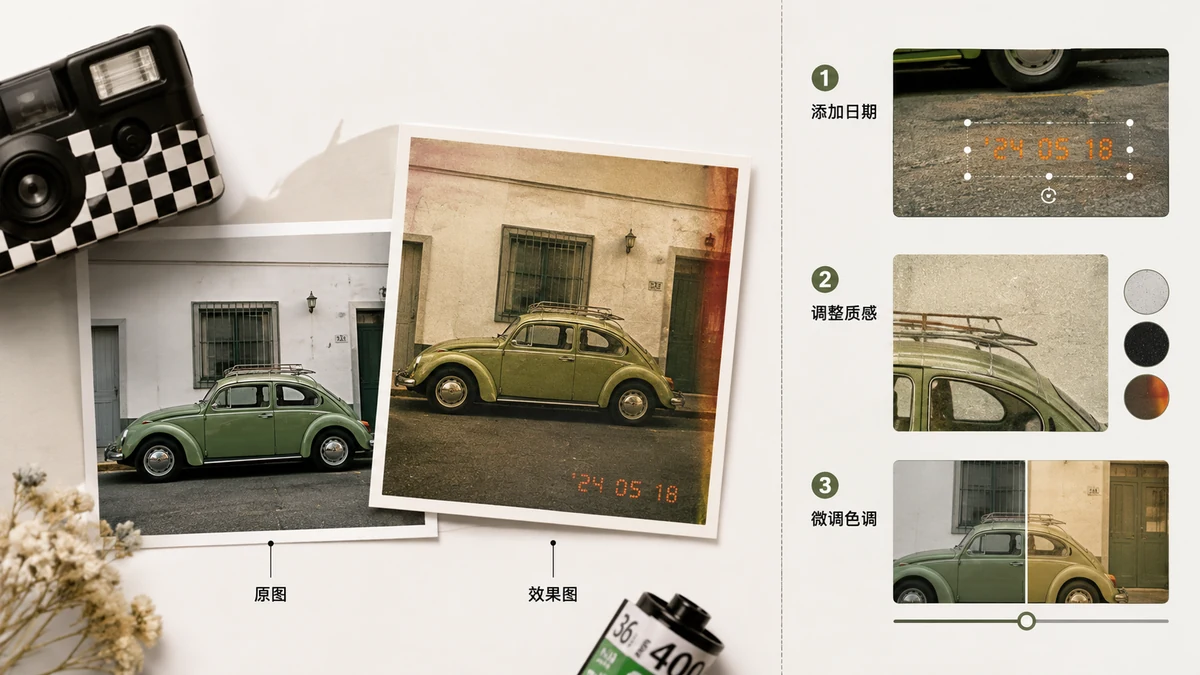
Flip through any 90s family album and almost every photo carries orange digits in the corner: '98 12 25. That wasn't a filter — the camera literally burned the date into the film with a row of tiny lights. Thirty years later, the digits once dismissed as "ruining the picture" have become the most recognizable badge of the film era.
Where those digits came from
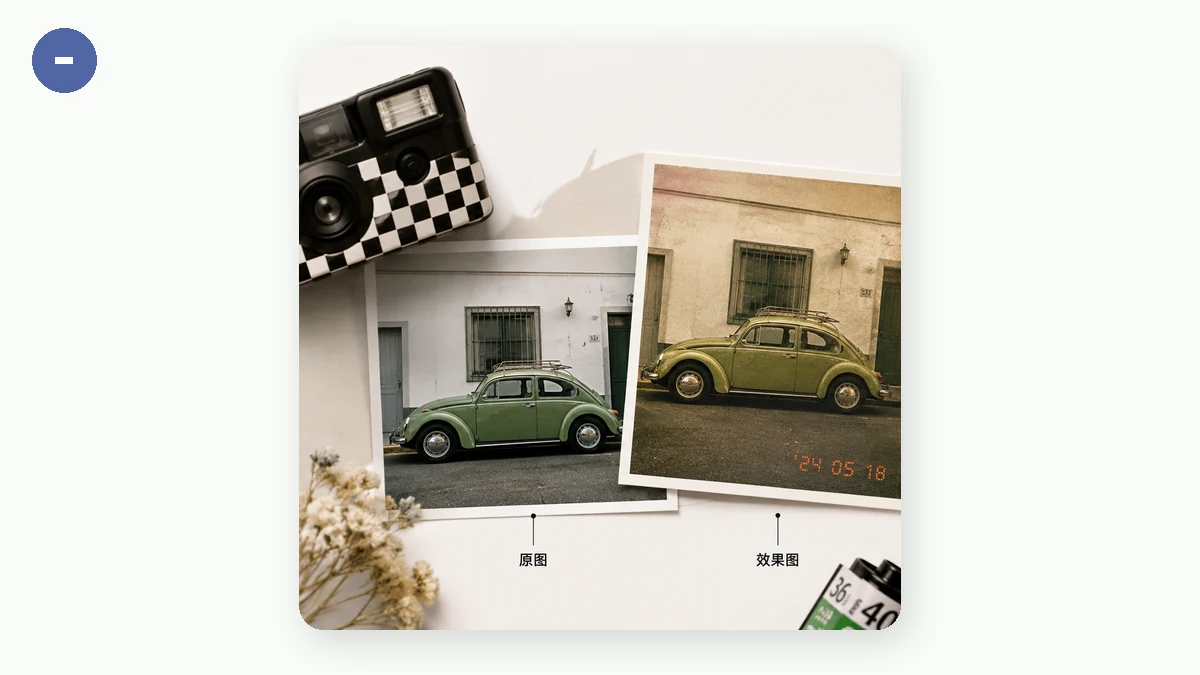
Film-era "data backs" projected the date onto the film's corner with LEDs at the instant the shutter opened, exposing it into the frame — which is why it glows slightly, leans orange-red, and uses monospaced seven-segment-style digits. Those "flaws" are exactly its charm: the date and the picture were made in the same instant, inseparable and unfakeable.
Digital cameras moved the date into EXIF metadata. Frames got cleaner — and the ritual of time printed onto the picture disappeared, until the retro wave brought it back.
If you recreate it, the date must be real

Most "vintage date" stickers on social media are typed by hand — usually wrong, and instantly recognizable as fake. The right way is to read the EXIF capture date: the DateTimeOriginal field records the moment the shutter fired, to the second.
That's what the Photo Date Stamp tool does: it reads EXIF per photo, so a 2019 shot gets a 2019 stamp; batch a whole roll and every photo keeps its own date. Photos without EXIF (screenshots, images scrubbed by social platforms) fall back to the file date, or you can type one date for the lot — say, the printing year of a batch of scanned prints. Curious what metadata your photos carry? Check with the EXIF Viewer first.
Four formats echo four eras of camera habits: minimalist 2026.08.06, the classic quotation '26 8 6, day-first 6 8 '26, and ISO 2026-08-06. Four glow colours — orange, red, yellow, white — with adjustable size and corner.
Beyond nostalgia: three cases where it earns its keep
Printed albums. Filenames and EXIF stay on the hard drive; the only time information that travels with paper is the date inside the frame. Ten years on, nobody has to guess "which year was this?"
Site and renovation records. A date in the frame is more immediate than a file timestamp and much harder to dispute — invaluable for insurance claims and acceptance disagreements.
Scanned archives. A batch of 1995 prints scanned today carries today's EXIF. Type 1995, stamp the batch once, and the archive dates itself.
Everything exports as copies — originals untouched — with ZIP download for batches. Like every tool on this site, your photos never leave the browser.
Turning the retro look into marketing material? Generate era-styled scenes with PixPix first, then stamp them here — a full "old times" product set in minutes.